Working for love. How passionate people are transforming business.

Ben Rigby is a Social Citizens Ambassador as well as the co-founder and CEO of Sparked.com—the world’s first crowdsourcing platform for unpaid labor (microvolunteering); the platform powers online volunteering programs for companies including Kraft Foods, SAP, Aegis Media, Teradata, and LinkedIn.
Ben Rigby can be found on Twitter @benrigby
You already know the story of Wikipedia: tens of thousands of people collaborate to create the most compelling, complete, and accessible encyclopedia on the planet. Working together, these anonymous strangers contribute hard labor to create something larger than the sum of the parts. And they do it not for money, but for love of the end result... (and reputation, fulfillment, and vanity).
And there are others: Flickr Commons, the Citizen Archivist, Galaxy Zoo, and many other stand-alone projects that attempt to harness the passions of enthusiasts to create something big and wonderful. Most of these projects rely on intricate software that takes one gargantuan task (e.g.: writing an encyclopedia) and breaks it up into many small bits (e.g.: writing or editing a single article). As you may already know, this model of work is called “crowdsourcing.”
Crowdsourcing is cool. You sound really smart when you say it. Good-looking people like Jeff Howe write books about it. But if you work at a nonprofit, small business, or department in a large corporation, it’s really hard to figure out how to make crowdsourcing work for you. While you have many gargantuan tasks waiting to be pegged with a rock, you haven’t got the foggiest idea how you might tap into the collective expertise of your fans and followers. You might post an occasional survey on Facebook or a question on Twitter, but that’s not exactly bringing down your Goliath.
So how do you get lots of people to work for you online?The short answer is: you pay for it.
The market for paid online labor has exploded over the last several years. Services that supply paid crowd labor include: Crowdflower, Mechanical Turk, 99Designs, Crowdspring, and many more. These services are very nifty. Crowdflower and Mechanical Turk can take your big project (e.g.: classify 1,000 products for an online store); break it up into 10,000 smaller tasks; double or triple check quality; and then deliver the completed project back to you. For money, you can hire tens of thousands of mercenary Davids to slay your Goliath.
The problem with these services is love. Or, more precisely, the lack of it.
Mercenary David doesn’t care about you or your giants. He just wants to get paid. Of course, you’ll be able to find exceptions, like a passionate designer at 99Designs who really dives into your project. But, as a rule, these crowdsourcing platforms distribute tasks to groups of workers who do it for money. That’s not exactly a fulfillment of the romantic vision that I painted in the outset where 1,000s of workers, driven by passion, sweat into the late-night to complete your project.
So, how do you get your project completed by workers who love you? You need to find and harness your super-fans.
It just so happens that people who work for passion are driving a tectonic shift in the way business gets done. The term used to describe this shift is “social business.” It’s a funny term because people formerly used it to describe a business with a social-good focus. But now, it’s being co-opted (unknowingly) by business folks to describe a business infused by social media. In short, a social business is one that crowdsources work to people (customers) who do it for love, online. See this fantastic collection of research by analyst Jeremiah Owyang from Altimeter group about the social business transformation.
Take, for example, Starbucks. People love Starbucks. They love it so much they’re willing to donate their scarce time and top creative juices to Starbucks at http://mystarbucksidea.force.com. If you have the next great idea for Frappacino flavoring, you can post it here. If you want to help Autodesk reduce their customer support costs and sell more product you can offer your skills directly to the effort (read about it here).
There are many more examples and dozens of software platforms to help businesses achieve ROI from super-fans, brand-ambassadors, enthusiasts, or any other number of terms used to describe people who work for a company because they love the brand.
Of course, the irony for the social sector is that it’s totally missing the boat. That which originated in the social sector--projects like Wikipedia that were envisioned for the greater good--have inspired business to adopt its model; they’re now making it 1,000 times more efficient. Autodesk relies on its super-fans to reduce customer support costs and they're achieving a 10x return on their investment. Autodesk’s thousands of Davids are slaying one giant cost center. That’s an amazing result.
Nonprofits are asking their Davids for money: mostly so that they can hire other Davids to slay their Goliaths. That’s 95 percent ludicrous*. If you were checking email this past holiday season, you were on the receiving end of the great year-end “ask.” Now imagine that the ask instead was to join a community like Starbucks’ or Autodesk’s - in which a pool of talented people is ready to jump when you say jump--ready to pitch in their expertise for a cause they hold dear.
In case my point isn’t exceedingly clear yet, I should state it explicitly: these super-fans, brand ambassadors, and brand-champions are volunteers**. Businesses are doing online volunteering better than nonprofits are doing online volunteering. In fact, businesses are so excited about online volunteering that it’s about to transform business as we know it. Hooray for business! Seriously, it’s an amazing transformation and adoption of the technology that I think is going to make for better businesses, smarter products, and happier customers.
But it’s a missed opportunity for many nonprofits who are still asking primarily for money. The good news is that there are many new entry points for organizations looking to harness the enthusiasm and expertise of their supporters, fans, and followers. There is a proliferation of tools and best practices.
Here’s a top five list for you to get started. Good luck and happy crowdsourcing!
- Sparked.com - starting with an admittedly biased and self-interested listing at the top. Sparked enables nonprofits (and soon, businesses) to distribute tasks to supporters. Gather up the people who love you and use Sparked to harness their collective expertise.
- UserVoice - ideate all day long with your supporters or customers. Rank, sort, and percolate great new ideas from the people who know your organization, products, or services best. Spigit - tap into the collective intelligence of employees, customers, and fans to tackle business objectives.
- Lithium - create your very own “customer community.” Influence, engage, and convert to supporters into super fans.
- ChallengePost - create a challenge and have your community collaborate to solve it.
And bonus: if you read one book, make it this one - Social Media ROI by Olivier Blanchard. Aimed at businesses (with a nod to nonprofits), it’s 100% about how to harness the smarts and passions of your crowd... while delivering a superlative experience for them at the same time.
* Of course, it’s 5% sane. I’ve been there with my own nonprofit and I know how tight money is and how long and painful it is to fund raise - and how important it is to the viability of the organization.
** The term “volunteer” may be too laden with meaning (perhaps even stigmatized) to be useful in the context of online crowdsourcing. If you want to get work done for free by people who love you, you’re going to have to call them something other than “volunteers.” Wikipedia calls them editors. Linux calls them contributors. Flickr calls them members. Galaxy Zoo calls them classifiers. Autodesk calls them super-fans. And the Case Foundation compelled me to write this post by calling me an “Ambassador.” But what am I really? I’m a volunteer. All of us who participate in crowdsourcing initiatives, forums, and Facebook surveys for brands are volunteers. We’re donating our time to the benefit of that organization. But if you call us “volunteers” - all of a sudden we’ve got images of altruism, fence-painting, and Norman Rockwell in our heads. For many reasons, the term doesn’t sync with our image of having fun online. And that’s the image we need to cultivate to drive ROI.
- 1 comment
- share it


I am Black. I am a Germaphobe. I am a Recovering Hipster.
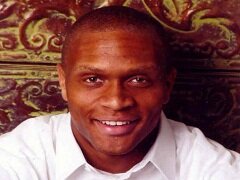
This February, Social Citizens celebrates Black History month and honors the impactful contributions made by Black Americans throughout our country’s history. Stacey Walker offers a reflection on what this observance means to him and what our individual and collective identities represent.
Stacey serves as a Program Coordinator at the Case Foundation and works with the Social Innovation team which oversees all general programming for the organization. Prior to joining the Foundation, he ran a nonprofit organization that focused on providing educational resources to underprivileged youth in his home state of Iowa.
I sat near the front of the class like I always tried to do, listening as the professor pointed to my best friend and roommate and asked a seemingly innocuous question, “And what island are you from?” Normally this would be an odd question coming from a professor, but we were in our first day of a course entitled Art of the Pacific, and my roommate was as brown as a paper bag with stubby legs complete with tribal tattoos and classic jet black Islander hair. My friend Paki then shared a little bit about the island of Samoa, his home country.
My professor looked at me next and asked, “And you? What island are you from?” In an attempt to be cheeky, I responded “Africa, probably Western Africa, although I’m not sure what country.” Thankfully my professor laughed and we all went on with class per usual . In fairness to him and to all others who ask me questions about my background, my ethnicity is not easily discernible. In addition to the more traditional traits associated with African Americans–a wide nose, full lips, and a long frame–I have very light hair, greenish eyes, and fair skin. Needless to say, I am accustomed to inquiries about my heritage.
However, as I reflect on this moment and other similar ones, I realize that my response was motivated out of a strange sense to better define my identity. It is strange because it wasn’t as if my identity was being assailed, but on a certain level, perhaps the subconscious level, it always feels as if the inquirer is automatically assuming I am an “other,” from some foreign faraway land, instead of just being from Toledo, Ohio, like them.
We celebrate Black History during this month, and while racial awareness is on my mind throughout the year, I lend the issue special attention during this time. I suggest that we all take a moment to reflect on what makes us, us.
To what things do we ascribe our identity; for me, that which is my most prized possession? And not just our racial identity, but our larger identity. For instance, I am Stacey Walker, an African American male, first and foremost. On other levels, I am an Iowan, a Liberal, a recovering hipster, an Agnostic, a secret Dixie Chicks fan, a germophobe, an eternal optimist, a writer, a young professional, a pianist, a tennis fan, a beleaguered political junkie, and one of those guys with a girly name. Collectively, all these things and more make us who we are, and yet not one of them defines us. This is the beautiful thing about identity, it’s an amalgamation of things, and perhaps this is why we all instinctively feel the need to make it clear to others.
Personally, it is particularly moving to be able to reflect upon my identity in the age of President Barack Obama. I often wonder how black identity in general has changed—in America and the world—now that it’s no longer inconceivable for a minority to ascend to the highest office in the land?
Alternatively, how has this changed what it means to be white, or any other race for that matter? Can we finally say that we’re approaching the idyllic society in which Dr. Martin Luther King, Jr. dreamed of, or are we still decades away? These are all complicated questions and they should be.
However, I have a strong faith in America; faith in our ability as a country to talk honestly about these things. And perhaps that very conversation is what will do the trick and really help us turn the corner to really appreciating and celebrating all of our identities. As a nation of immigrants, our strength has always lied in our diversity, and it is my hope that this will continue to be the case going forward.
- 2 comments
- share it
Looking for your Next Challenge?

For many Social Citizens and Millennials alike, the desire to do what you love and love what you do is taking precedence over more traditional factors such as salary and work hours. Barbara Bush and Jonny Dorsey (a Social Citizen Ambassador) embraced their own dreams to promote social good and created the Global Health Corps (GHC). The nonprofit organization (and former grantee of the Case Foundation) aims to “mobilize a global community of emerging leaders to build the movement for health equity.”
Enter GHC and its annual Fellowship program, which is now accepting applications for its 2012-2013 placements until February 17, 2012. It is through this unique approach of identifying young leaders under the age of 30 and empowering them to utilize their skills and fresh perspectives that is creating valuable change in the U.S. and around the world. Fellows commit 13 months to GHC and during that time may find themselves working in communications, finance, health, and many other subject areas with partner organizations such as: Mothers2Mothers, FACE AIDS, and Village Health Works.
Barbara and several of the DC -based GHC Fellows recently stopped by the Case Foundation to update Social Citizens on new developments for GHC and their expansion of the Fellows program.
Wondering how GHC applies to someone who does not have specific health, international or leadership experience? According to Barbara, she’s seeing a growing trend in GHC Fellow placements with partner organizations where groups are specifically requesting people with skills outside of the "traditional" fields. Barbara and her colleague Katie Bollbach elaborate on what it takes to be a GHC Fellow this video interview.
Learn more about GHC and find out how you can support this movement to build health equity around the world.
- Add new comment
- share it
Social Citizens Weekly Round Up #9

Each week, we’ll cull the interwebs for the most relevant articles, videos and commentary about Millennials and social change, and then present them right here in a weekly round-up. It’s not to say we won’t also provide our own fresh content and perspectives throughout the week, because we will—as will our provocative and savvy Social Citizen Ambassadors. But you can view this space as a central repository for all of the great stuff that’s filling our newsfeeds, twitter feeds, and Facebook streams.
We’ll do the curating for you, just come by and pay us a visit – and drop a comment every now and then to let us know how we’re doing and what we’re missing. And now for this week’s round-up…
5 Ways Young People Can Bounce Back From Economic Setbacks
Today’s challenging economy presents a variety of hardships and obstacles for individuals of all areas, ages, and backgrounds. One group of people often overlooked when it comes to economic struggle is young people. While the next generation may not be worrying about their 401Ks or mortgages, they are worrying about unemployment, student loans, and other similar financial concerns.
Time magazine writer Dan Schawbel notes in a recent piece, “It’s hard to become the leaders of tomorrow without jobs today. The International Labor Organization estimates that around the world, there are nearly 75 million unemployed youth — a new “Lost Generation,” in the words of panelists discussing the problem at the annual World Economic Forum in Davos, Switzerland.
Schawbel offers some advice for these young people when it comes to “maximizing opportunities” and finding ways to make the most out of the worst.
- Create multiple income streams.
- Approach your job search as you would a new client.
- Have a positive attitude and be confident in yourself.
- Become a lifelong student.
- Find mentors and start building relationships with them.
Have you tried any of these approaches?
Want to Change the World but Don’t Know Where to Start?
Steve McCoy-Thompson asks a question that is hot on the minds of many young professionals across sectors—how, when, and where does one begin when they want to change the world? For those of us who are Social Citizens, finding an outlet that integrates one’s passions can often feel out of reach. McCoy-Thompson explores how that sentiment is multiplied when applied to the job search.
A similar desire to create positive change can be equally as challenging for companies. “Many of the world’s greatest companies have declared their strategic intent to institute sustainability, and some have made remarkable progress. But many are still struggling with the fundamental question of “what to do” to realize these ambitions: how to integrate sustainability into their core business model, their daily operations, and the personal performance of thousands of disparate employees.”
So what’s a young person to do when both they, and it seems many companies, want the same thing, but neither know how to achieve it? McCoy-Thompson points out that “most companies understand the why of sustainability, but are grappling with the what… To change the world, people need to own the change, and the owners need to be in a position to make a difference.”
Have you been faced with a similar situation? Which side of this coin are you on and what advice would you give to others?
- 1 comment
- share it