

Does Fast Company Really Understand Influence?

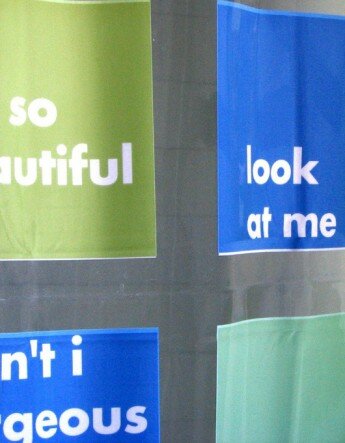
look at me, I'm so beautiful, naked and happy, me me me...

There’s no question social media has given rise to a number of things we couldn’t have imagined just a few short years ago.  One of the more interesting things we’ve witnessed is the changing dynamics of individuals as “influencers” based on superficial metrics like how many Twitter followers or Facebook friends one has. Businesses and organizations have always strived to have a positive influence, but when we look at the role that social media has played in breaking down barriers and catapulting individuals into “influencers” the waters become a little murkier.  After all, what is influence?  

To me, influence is not about the number of retweets or votes in a contest, it’s about following and engaging with people whom I genuinely respect for their opinions and outlooks on topics that I care about.  This is the kind of engagement that has opened me up to new friends, new possibilities and exposed me to new ideas – none of which are things that I believe can be measured with metrics or algorithms.  That’s why, as I was peeling back the onion on Fast Company’s new Influence Project, I was surprised with what I saw.  

Truth be told, Fast Company is my favorite magazine and is the only magazine I still subscribe to and receive in the mail.  When I read about an experiment they were going to do a couple of issues back with the viral marketing company Mekanism, I was intrigued.  But in watching the execution of the campaign over the course of the past week, it has completely missed the mark. Fast Company set out to turn their readers into marketing machines using their personal influence to get their friends to click, register, and boast their own influence.  Think of it as an online yearbook where the cheerleaders and prom king and queen have the largest pictures, based solely on their popularity.

Here’s how it works: users interested in providing their data to the project can sign up in about a minute and are given a unique URL to Tweet, Facebook, blog, etc. Every time their unique URL is clicked, their influence goes up – the concept is pretty simple. But, the scale of your influence, and therefore the size of your photo, is based on two measures (as outlined below by Fast Company):

1. The number of people who directly click on your unique URL link. This is the primary measure of your influence, pure and simple.

2. You will receive partial “credit” for subsequent clicks generated by those who register as a result of your URL. In other words, anyone who comes to the site through your link and registers for their own account will be spreading your influence while they spread theirs. That way, you get some benefit from influencing people who are influential themselves. We will give a diminishing, fractional credit (1/2, ¼, 1/8 etc ) for clicks generated up to six degrees away from your original link.

Fast Company started this campaign with a simple question – who are the most influential people online right now?  But, online influencers and interested bystanders alike are asking, who cares?  Would you tweet your followers, email your friends and update your facebook status in order to be considered an influencer?  What could Fast Company do to turn this into less of a gimmick and more about why influence matters? Does online influence really matter?

Comments

7 Jul 2010
Sharon Tewksbury-Bloom

One aspect of online influence that is important and perhaps overlooked is the influencer having a unique and authentic voice. On Twitter you are more likely to get followers and become more influential by having interesting and unique things to say.

I wonder if this Fast Company experiment could hurt the future influence of the identified influencers. How do their followers feel about being led to click on links that were deceptive and part of what came across as a personality contest?

8 Jul 2010
Bob Safian

Kari,

Bob Safian here, the editor of Fast Company. Thanks for your nice words about our magazine. I'm sorry that you've found the Influence Project disappointing so far. I hope you'll stay with it. Our goal is to conduct a real-time editorial experiment, that gathers real data about how people interact on the web. We want to make it simple for folks to participate, which is why only a single click is required. We wanted to make it appealing, which is why we've included photographs.

But in our editorial coverage, we will be looking beyond just the simple click counts, to explore how influence moves online. Senior editor Mark Borden posted a blog recently explaining some of this further. http://www.fastcompany.com/1667964/popularity-ego-and-influence-what-is-....

We plan to drill down into the information, to help understand for ourselves--and explain to our readers--all the different ways people online try to exert influence: what's effective, what's appropriate, what's worth paying attention to or steering clear of, etc. This is a fact-finding study, and not the only study we'll be tapping into.

Thanks again,

Bob

8 Jul 2010
Kari Dunn Saratovsky

Bob, I truly appreciate your taking the time to post a comment - and I stand by my words about Fast Company.  It is the only magazine my husband and I still subscribe to and read cover to cover each month. 

I also appreciate the clarification that this "experiment "is only the tip of the iceberg - and that you will be drilling deeper into ways in which people exert their online influence in upcoming publications.  Your project has stirred quite a response - and I look forward to watching as things continue to unfold.  It says a lot that you are personally being proactive in your response and that is certainly appreciated.

Thanks, KDS

9 Jul 2010
Devin Day

Excellent post. I enjoyed hearing from both Kari and a response from the FC editor.

I think that this is an interesting experiment by FC. Even if it ends up a flawed way to identify influence it will be great to see what will come of it. Experimenting is the only way we can learn.

Great Post.

-Devin Day
http://www.placeforpeople.com
http://www.twitter.com/placeforpeople

Post new comment

Your email is kept private and will not be shown publicly.
  • Web page addresses and e-mail addresses turn into links automatically.
  • Allowed HTML tags: <a> <em> <strong> <cite> <code> <ul> <ol> <li> <dl> <dt> <dd><img><!—break--><blockquote><p><div><object><param><embed><h3><sup>
  • Lines and paragraphs break automatically.

More information about formatting options

By submitting this form, you accept the Mollom privacy policy.